

European-style kitchens are designed around one constraint that forces better decisions: space is finite, so every element has to earn its place. The result is a kitchen that feels calm and architectural, but also highly practical: integrated appliances, full-height cabinetry, and storage systems that keep counters clear.
If you’re collecting European kitchen ideas, these ten features are a solid starting point. You can use them as a checklist for a full renovation, or as a menu of upgrades to make your kitchen feel more like a modern European kitchen without changing the whole room.
European Kitchen Feature Scorecard
Use this table to prioritize European kithen design element. It’s designed to be practical and understand, what you truly need in your kitchen.
1. Modern European Kitchen Cabinets
.webp)
Modern European kitchen cabinets are typically flat-front, low-detail, and full-height. The goal is a continuous “furniture wall” that reduces visual breaks and increases closed storage. This is the foundation of most European kitchen designs and modern European kitchen cabinets.
European cabinetry looks calm because it avoids busy elements: raised panels, thick frames, oversized crown details, and frequent material changes. Instead, you get consistent reveals, aligned lines, and tall units that do serious storage work.
What to include:
- Flat-front doors (slab or subtly detailed, but minimal)
- Full-height pantry and appliance walls where possible
- Fewer separate “runs” of cabinets, more continuous compositions
Full-height storage is one of the easiest wins in compact kitchens because it replaces countertop clutter with closed volume.
2. Integrated Appliances
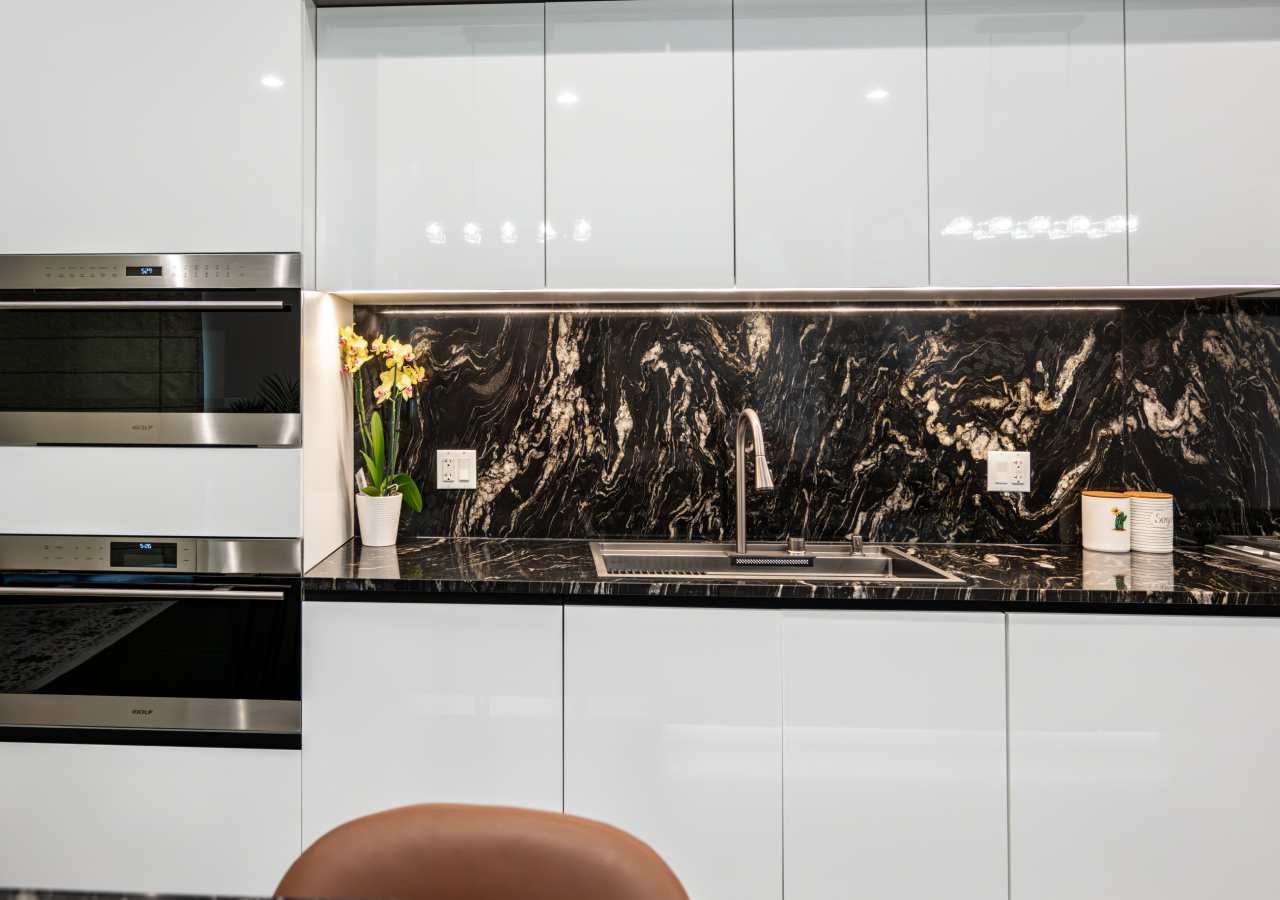
Integrated appliances reduce visual noise by hiding large elements behind cabinet fronts. Panel-ready fridges and dishwashers deliver the biggest change. Integration is most impactful on the largest appliances first.
You do not need to integrate everything to get the effect. The best approach is selective: hide what dominates the view, simplify the rest.
High-impact priorities:
- Panel-ready refrigerator (or a built-in look)
- Panel-ready dishwasher
- Built-in hood solution (or a clean-lined canopy that aligns)
If your layout allows it, a pocket-door zone can hide coffee and toaster setups without losing access.
3. Zone-Based Layout
.webp)
Modern European kitchens are planned around workflow zones: prep, cook, clean, and pantry. Zoning reduces steps, improves access, and makes the kitchen easier to keep tidy.
Think of your kitchen as a workflow system, not a set of cabinets.
The four core zones:
- Prep zone: primary counter, knives, mixing tools, bins
- Cook zone: cooktop, pots, spices, oils
- Clean zone: sink, dishwasher, dish storage
- Pantry zone: dry goods, snacks, small appliances (ideally behind doors)
Put the dishwasher close to dish storage, and keep prep space between sink and cooktop whenever possible.
4. Island vs Peninsula
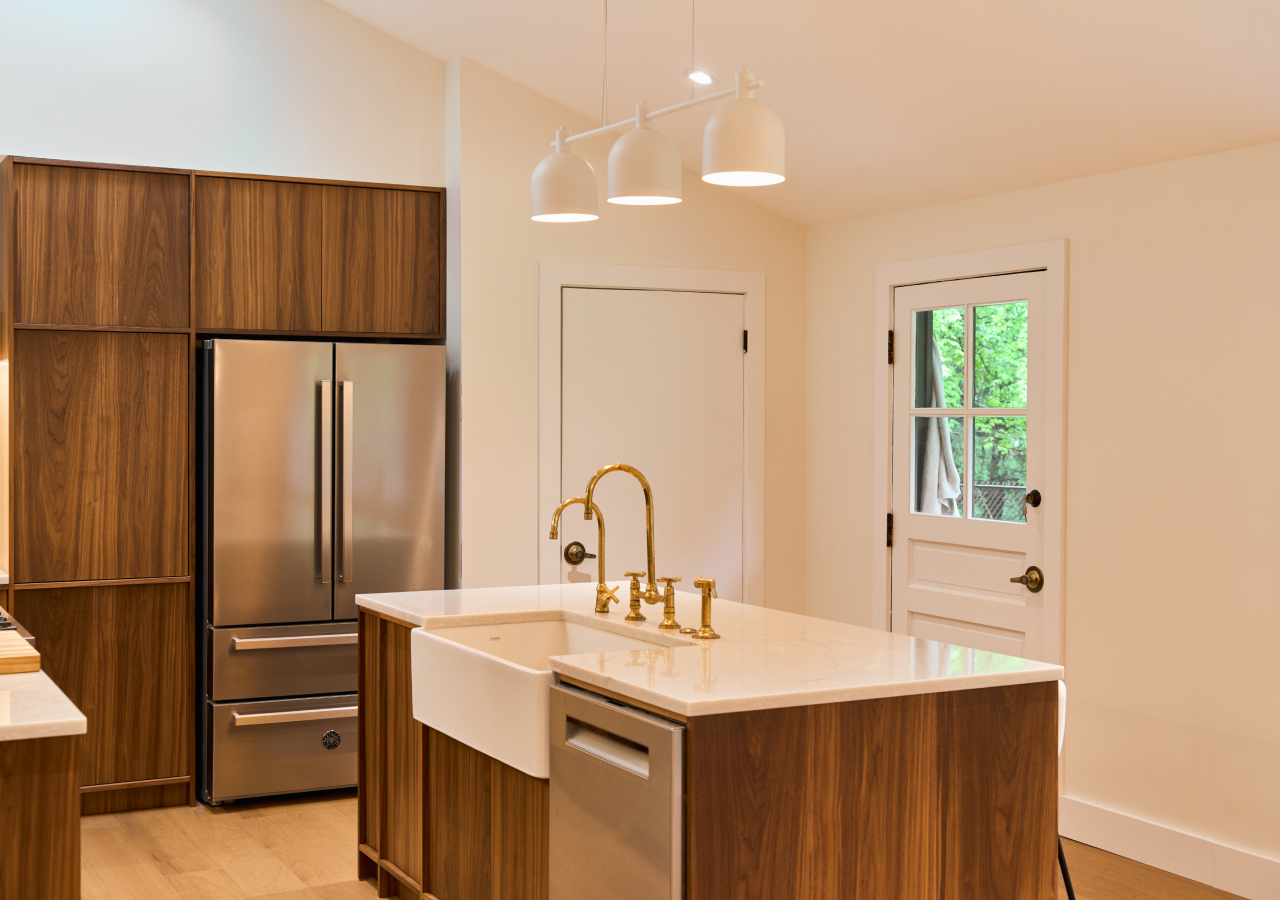
A European kitchen island is usually precise and functional, not oversized. In tighter spaces, a peninsula often performs better than an island because it protects circulation while still adding storage and prep space.
If your space is generous, an island can be the best prep and storage upgrade you make. If it is tight, a peninsula often wins because it creates work surface without pinching circulation.
Best practice:
- Favor drawers in the island or peninsula (faster access, less bending)
- Keep seating visually light so it does not dominate the room
- Prioritize clearances over extra countertop inches
5. European Kitchen Cabinet Organizers
.webp)
European kitchens stay clean because storage is engineered, not improvised. Cabinet organizers like inner drawers, pull-outs, and tall pantry systems keep daily items behind closed fronts. This supports the cluster European kitchen cabinet organizers and improves function immediately.
This is where European kitchens quietly win: everything has a home, so counters stay clear.
High-impact organizers:
- Inner drawers behind a tall front (great for plates, snacks, linens)
- Pull-out waste and recycling near the prep zone
- Tall pantry with pull-outs or optimized shelving
- Corner systems only when needed, otherwise simplify the plan
In a small European-style kitchen, inner drawers plus a tall pantry often replace countertop appliances by giving them a hidden home. You get back surface area without changing the footprint.
6. Minimal Sink Setups
.webp)
European-style sink setups are simple, low-visual, and easy to clean. The function often comes from integrated accessories, not decorative fixtures. The goal is fewer parts, smoother surfaces, and faster cleanup.
What to look for:
- Undermount or flush-mount sink where feasible
- Minimal faucet form (consistent finish with hardware)
- Accessories that support workflow (prep board, colander, drain setup)
7. White and Neutral Finishes

A white European kitchen works best when the white is warm-leaning and low-glare. Neutral palettes are used as a backdrop for texture and light, not as a shiny statement. This supports white European kitchen and European white kitchen cabinets.
Finish rules that keep it modern:
- Prefer matte or low-sheen surfaces
- Limit the number of finishes (often 2–3 reads cleanest)
- Add one warm element to prevent sterility (wood, warm light, textured surface)
8. Natural Materials

Natural materials are how European kitchens add warmth while staying minimalist. Wood veneer, stone, and subtle texture create depth without adding decor.
Use natural materials like punctuation, not like a collage.
Easy ways to apply it:
- Wood on tall units or an island to warm a neutral room
- Stone or a stone-look surface to ground the palette
- Repeat one warm material across zones so it feels intentional
9. Lighting That Layers

European kitchens rely on layered lighting because it makes the space work and look better. Task lighting supports cooking, and softer ambient light supports evenings. Statement fixtures should come after function is solved.
A simple lighting stack:
- Task: under-cabinet lighting for prep
- Ambient: recessed or ceiling fixture for general light
- Accent: pendants or a sculptural piece to define the room
Add dimmers wherever possible so the kitchen can shift from work mode to evening mode.
10. A Small Bistro Moment
.jpg)
Many European kitchens feel lived-in because they include a small, casual eating spot. A bistro corner is low-cost, high-impact, and makes the kitchen more social. A simple herb setup adds life without clutter.
Simple options:
- A slim table or a small overhang with two stools
- Keep it visually light: simple chairs, clean lines
- Add a small herb ledge by a window, or a tidy countertop planter zone
Quick Comparisons and a Step-By-Step Plan
If you want a modern European kitchen that stays calm long-term, pocket-door zones tend to age better than open shelving.
Conclusion
A European-style kitchen is not one specific look. It is a system: clean cabinetry, integrated elements, engineered storage, and a layout that reduces friction. If you only change two things, start with full-height flat-front cabinetry and cabinet organizers like inner drawers and pull-outs. Those upgrades typically deliver the biggest jump in both visual calm and everyday function, especially in smaller kitchens.
If you want help translating these features into a specific plan for your space, Corner can map the right combination of cabinetry, storage systems, and finishes to your layout and budget, then turn it into a buildable design package.


